
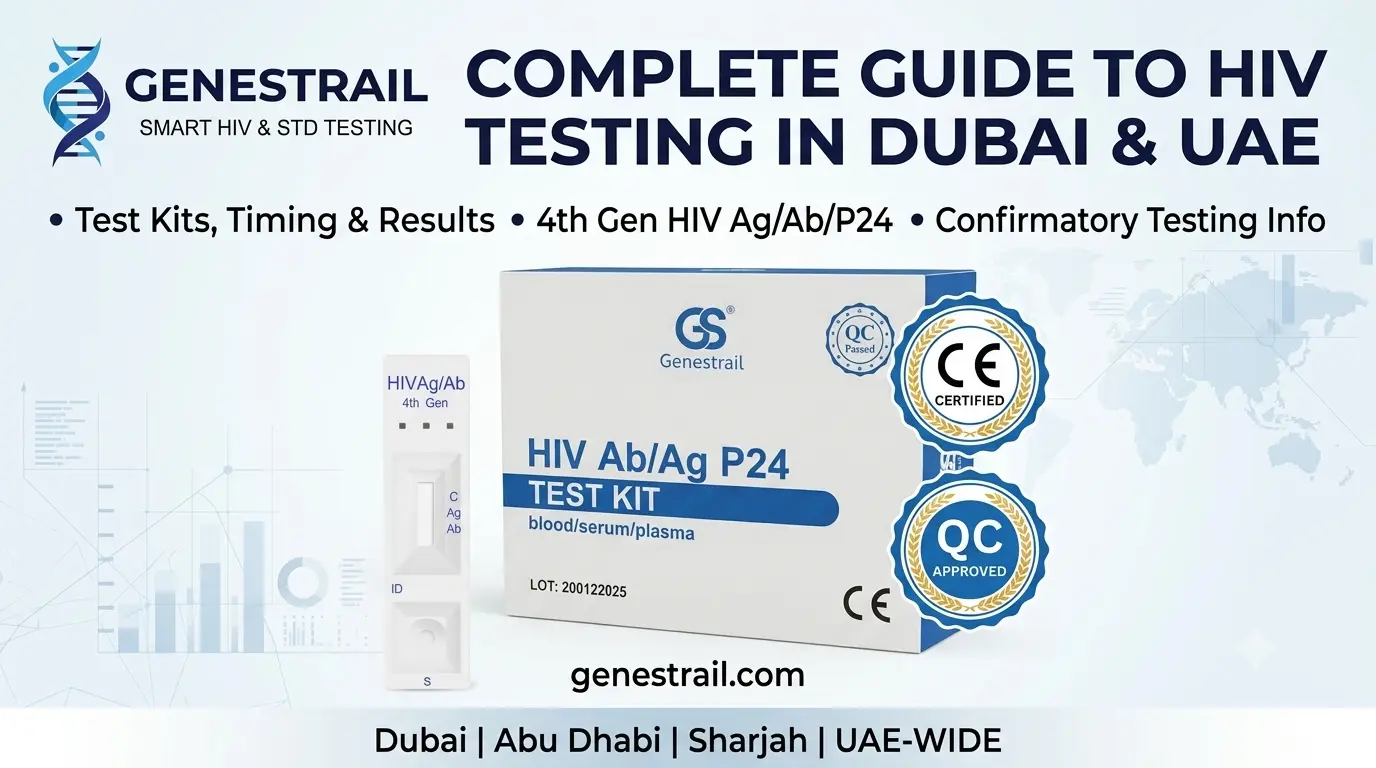
If you are looking for an HIV test in Dubai or elsewhere in the UAE, it is important to understand the different types of HIV tests, when testing can detect an infection, how results are interpreted, and when additional medical testing may be needed.
HIV testing is an important part of sexual health. Depending on the type of test, HIV testing may look for HIV antibodies, the p24 antigen, or both. Some testing options can be used outside traditional laboratory settings, while laboratory testing may be recommended in certain situations.
For people in Dubai, Abu Dhabi, Sharjah and other parts of the UAE, understanding the available testing options can help you make a more informed decision about your health.
This guide explains HIV testing in Dubai and the UAE, including HIV test kits, 4th generation HIV testing, testing timing, results, privacy and important next steps.
What Is an HIV Test?
An HIV test checks a sample for evidence of HIV infection.
Different HIV tests detect different markers of infection. Depending on the test, these may include:
- HIV antibodies
- HIV-1 and HIV-2 antibodies
- HIV p24 antigen
- A combination of antigen and antibodies
The type of test and the time since a possible exposure can affect when HIV can be detected.
For this reason, choosing the appropriate test and testing at an appropriate time is important.
HIV Testing in Dubai and the UAE
People searching for an HIV test in Dubai may be considering several options, including laboratory testing, rapid testing and self-testing.
The appropriate option can depend on factors such as:
- When a possible exposure occurred
- The type of test being considered
- Whether you need a laboratory-based test
- Your need for privacy and convenience
- Whether follow-up testing may be required
Similar considerations apply to people looking for an HIV test in Abu Dhabi, Sharjah, Ajman and other Emirates.
If you are considering an HIV test kit, always read the manufacturer's instructions carefully and check the intended use of the specific product.
What Types of HIV Tests Are Available?
HIV testing is not a single type of test. Different tests detect HIV at different stages and use different technologies.
Antibody HIV Tests
Antibody tests look for antibodies produced by the immune system in response to HIV.
They can be available as rapid tests and other testing formats. However, antibodies take time to develop, which is why testing too soon after exposure may not detect an infection.
4th Generation HIV Tests
A 4th generation HIV test detects both HIV antibodies and the p24 antigen.
Because it looks for more than antibodies alone, 4th generation testing can detect HIV earlier than antibody-only testing in many circumstances.
For people researching an HIV test kit 4th generation option, it is important to follow the specific manufacturer's instructions regarding sample collection, timing, interpretation and limitations.
Genestrail provides information about its 4th Generation HIV Ag/Ab/P24 Test Kit, including the product's intended testing approach.
Rapid HIV Tests
Rapid HIV tests are designed to provide results relatively quickly compared with some laboratory-based testing processes.
However, a rapid result should always be interpreted according to the specific test instructions. A reactive screening result may require appropriate confirmatory testing by a healthcare professional.
When Should You Take an HIV Test?
One of the most important questions about HIV testing is when to test after a possible exposure.
There is a period after infection during which an HIV test may not yet be able to detect the infection. This is commonly referred to as the window period.
The window period varies according to the test used.
Why Testing Too Early Can Be a Problem
A test taken very soon after a possible exposure may produce a negative result even if infection has occurred.
Therefore, a negative result does not necessarily exclude HIV if the test was performed during the relevant window period.
The appropriate testing schedule depends on the test type and individual circumstances. If you have concerns about a recent possible exposure, a qualified healthcare professional can advise you about appropriate testing and follow-up.
What Does a Negative HIV Test Result Mean?
A negative result means that the test did not detect the markers it was designed to detect at the time the sample was tested.
However, interpretation depends on:
- The type of HIV test
- How long it has been since possible exposure
- Whether the test was performed correctly
- The manufacturer's stated testing window
- Whether additional testing is recommended
If testing occurred during a window period, repeat testing may be appropriate.
What Does a Reactive HIV Test Result Mean?
A reactive screening result does not by itself establish a final HIV diagnosis.
Screening tests can sometimes produce reactive results that require additional testing.
If an HIV screening test is reactive, seek appropriate medical advice and follow the recommended confirmatory testing process.
Do not make a diagnosis based solely on a home screening result.
Can You Use an HIV Test Kit at Home?
Some HIV test kits are designed for testing outside a traditional laboratory setting.
People may consider home testing because of:
- Convenience
- Privacy
- Accessibility
- Flexible timing
However, home testing should be performed exactly according to the manufacturer's instructions.
Before using an HIV test kit, check:
- The test's intended use
- The sample type required
- The expiry date
- Storage conditions
- The testing procedure
- Result interpretation instructions
- The manufacturer's stated limitations
For people researching an HIV test kit in Dubai or an HIV test kit in the UAE, understanding these points is more important than choosing a product based only on price.
How Much Does an HIV Test Kit Cost in the UAE?
The price of an HIV test kit can vary depending on the test type, manufacturer, technology, packaging and where it is purchased.
For example, a 4th generation test and an antibody-only rapid test may have different specifications and pricing.
If you are comparing an HIV test kit price, don't look at cost alone. Consider the test technology, intended use, instructions, quality documentation and whether the test is appropriate for your testing situation.
Where Can You Get an HIV Test Kit in Dubai?
People searching for an HIV test kit near me or an HIV test kit in Dubai may encounter pharmacies, healthcare providers, laboratories and online suppliers.
When considering a test kit, check:
- Whether the product is intended for your type of testing
- Manufacturer information
- Instructions for use
- Expiry date
- Storage requirements
- Packaging condition
- Appropriate regulatory or quality documentation
- Customer support availability
For additional information about private home HIV testing options, see our previous guide:
Where to Buy an HIV Test Kit in Dubai: Your Complete Guide to Private Home Testing
This article provides additional information for people exploring home HIV testing options in Dubai.
What About Buying an HIV Test Kit From a Pharmacy?
Some people specifically search for an HIV test kit in UAE pharmacies.
Availability can vary between pharmacies, locations and products. If purchasing a test kit, verify that the product is appropriate for its intended use and that the packaging, expiry date and instructions are clear.
You should also avoid choosing a test solely because it is the cheapest option.
For medical testing, understanding what the test detects and how the result should be interpreted is essential.
HIV Testing in Abu Dhabi
People searching for an HIV test kit in Abu Dhabi should consider the same fundamental factors as people testing in Dubai:
- Appropriate test type
- Timing after possible exposure
- Correct sample collection
- Manufacturer instructions
- Result interpretation
- Follow-up testing where appropriate
The same principles apply across the UAE, including Sharjah, Ajman, Ras Al Khaimah, Fujairah and Umm Al Quwain.
The location may affect where testing services or products are available, but it does not change the biological window period of an HIV test.
Why Privacy Matters in HIV Testing
Privacy can be an important consideration when people seek sexual-health testing.
Some people may prefer a testing option that allows them to manage the process privately and conveniently.
However, privacy should not come at the expense of appropriate medical care.
If you receive a reactive result or have concerns about a possible recent exposure, seek appropriate professional medical advice.
HIV Test Kits: What Should You Check Before Buying?
Before purchasing an HIV test kit, consider the following checklist.
1. Test Type
Understand whether the test detects antibodies, antigen, or both.
2. Intended Use
Read the manufacturer's instructions to understand who the test is intended for and how it should be used.
3. Testing Timing
Consider how long it has been since a possible exposure.
4. Sample Requirements
Check whether the test requires blood, oral fluid or another sample type.
5. Instructions
Make sure the instructions are clear and available before using the test.
6. Expiry Date and Storage
Do not use an expired test or a product that has not been stored according to the manufacturer's requirements.
7. Follow-Up
Understand what you should do if the result is reactive, invalid or unclear.
HIV Testing: Common Questions
Is an HIV test available in Dubai?
Yes, HIV testing options may be available through healthcare providers, laboratories and other appropriate testing channels in Dubai. The most suitable option depends on your circumstances and the type of test required.
Can I buy an HIV test kit in Dubai?
HIV test kits may be available through different channels. Before purchasing, check the product's intended use, manufacturer instructions, quality information, expiry date and storage requirements.
Is a 4th generation HIV test better?
A 4th generation test detects both HIV antigen and antibodies, which can allow detection earlier than some antibody-only tests. However, no test should be considered appropriate solely because it is described as "4th generation." The timing of testing and the specific manufacturer's instructions also matter.
How soon can an HIV test detect infection?
The answer depends on the test type. Different HIV tests have different detection windows. Testing too early can result in a negative result despite an infection being present.
What should I do after a reactive HIV test?
A reactive screening result should be followed by appropriate medical evaluation and confirmatory testing. Do not assume that a reactive screening result alone is a final diagnosis.
Where can I get an HIV test in Abu Dhabi?
Testing options may include healthcare providers, laboratories and appropriate testing services. If you are considering a home test kit, make sure the product is appropriate for your circumstances and follow its instructions carefully.
Should I choose an HIV test based only on price?
No. When comparing an HIV test kit price, consider the test technology, intended use, manufacturer information, instructions, storage requirements and appropriate follow-up—not just the purchase price.
Final Thoughts: Choosing the Right HIV Testing Option in the UAE
Whether you are searching for an HIV test in Dubai, an HIV test kit in Abu Dhabi, or HIV testing options elsewhere in the UAE, the most important factors are appropriate timing, the type of test, correct use and responsible interpretation of results.
Home testing can provide convenience and privacy for people who choose an appropriate self-testing option, but it is important to understand the limitations of screening tests and seek professional medical advice when follow-up or confirmatory testing is required.
Genestrail provides information and testing products for people exploring HIV and STD testing options. You can explore the Genestrail STD testing products or learn more about Genestrail.
If you have questions about a product or testing option, you can also contact Genestrail.
Medical information notice: This article is for general educational purposes and is not a substitute for diagnosis, treatment or individual medical advice. Always follow the instructions supplied with the specific test and consult a qualified healthcare professional when appropriate.
Sources and Further Reading
For medical information, testing guidance and current recommendations, readers should consult authoritative health organizations and the instructions supplied with the specific HIV test being used.
